
I have been reading a lot about grief lately. Reminders that grief is not linear, and with some losses it’s never going to go away. On a difficult day recently, a dear friend texted me that the depth of the grief is a reflection of the depth of the love. I read some time ago that grief is all that love that has nowhere to go. Even if these sentiments are true, grief is nonetheless both terrible and tenacious.
I think it’s interesting how grief can alter how you perceive time. The other day was four months since I lost my sweet pug, Pebbles. The first month kind of disappeared in a haze. I spent most of it staring into the middle distance and bursting in to tears. Both my husband and I were in shock at the realization that it had been an entire month without her. But then when the fog lifted, time suddenly started moving SO…SLOWLY…Getting through every day without her seemed like work and perhaps that’s what made the last three months seem SO…LONG…
When my first dog Lulu died, I was so sad, but, I was also so concerned about making sure Pebbles didn’t get depressed that I focused all my attention and energy on her. It didn’t matter if I was having a really sad day over the loss of my little Lulu — if Pebbles wanted to play I stopped what I was doing and dropped to the floor immediately. I didn’t want my grief to affect her or rub off on her. I had read so many accounts of normally happy dogs becoming inconsolable after losing a sibling, so I was on high alert. As it turned out, Pebbles absolutely thrived being the only dog in the house. People kept asking me when we were going to get another dog or telling me Pebbles is going to be so lonely all by herself. Lulu had almost five years of being queen of the castle and judging by Pebbles’ temperament after Lulu died, I knew that letting Pebbles have 100% of our time and attention was absolutely the right thing. If grief is indeed love with nowhere to go it definitely helped me manage my grief by pouring all that “extra” love into Pebbles.
When my mom died, it was so sudden, it shocked everyone. My normally calm, happy, and unflappable father completely fell to pieces. Witnessing his devastation was more painful than my own grief. I planned the funeral, chose her resting place, and began sorting out all the myriad of paperwork that surfaces when someone dies. After the funeral we brought my dad to our house where he stayed for the next six months. I spent those months holding his hand, both literally and figuratively. I was so concerned about him, that I didn’t do much processing of my own feelings. However, in retrospect I am absolutely certain that helping my dad though his grief was immensely helpful in navigating through my own. Just like how focusing on Pebbles was a salve on the loss of Lulu.
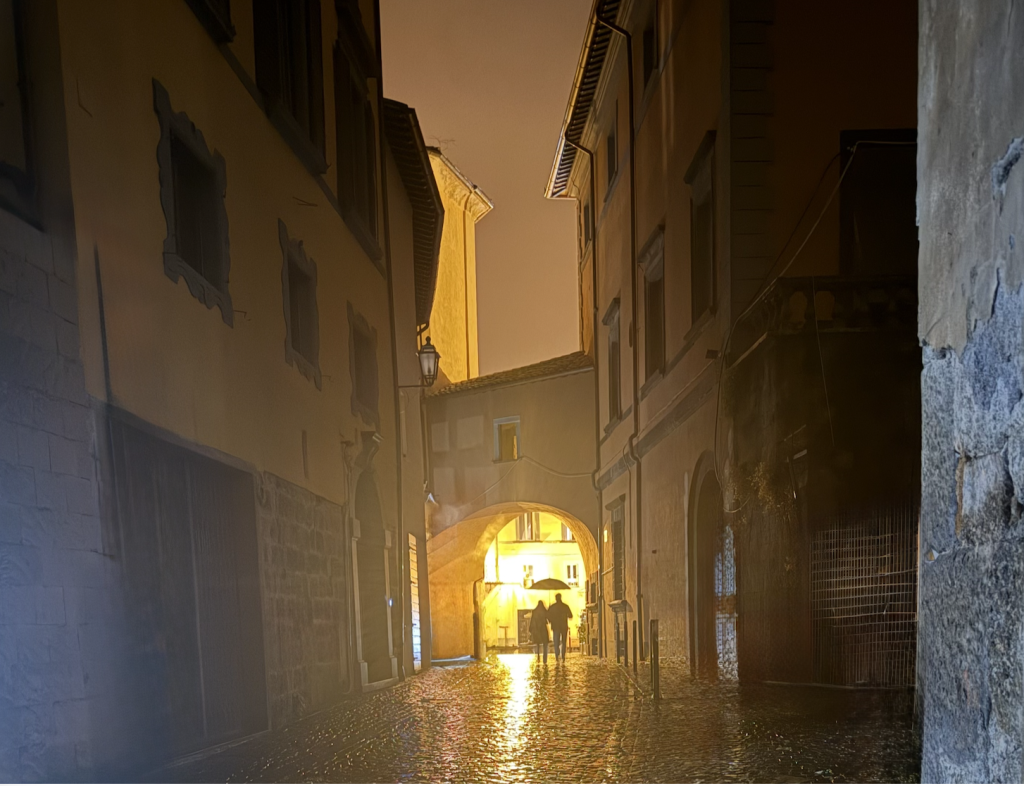
I also think it’s interesting when dealing with grief, those brief moments where one “forgets” — that horrible moment brief moment when you expect them still to be there — perhaps occur about the same amount of times but stretch over different durations depending on how frequently you interacted with that person.
There was not a single day for so many years that I didn’t speak to, or see, my dad. When we were not together we spoke, every single day, at 4.30pm. It became an automatic reflex that after I fed “the girls” (Lulu and Pebbles, the pugs) their dinner, I grabbed my phone and we headed out into the yard. It seemed to be months and months before I stopped grabbing my phone at that time. It still happened occasionally but for the longest time it happened every single day, highlighting his absence, what seemed like constantly. I remember my brother commenting to me that something would happen or he’d read something and immediately think — I need to tell Dad — and then…oh…boo…sigh…I feel like these moments happened over a longer period of time for him than they did for me, because mine happened every day for so many months. I probably had more of those moments but had to force myself to remember every day that he was gone.
Similarly, for 15 years my schedule — my entire existence really — was dictated by a pug (or two). I didn’t realize how many things I did automatically for them or because of them — they had me very well trained. It’s not just my heart and my mind that miss Pebbles terribly, but my body doesn’t quite know what to do without walks and feedings and snackies and potty breaks. Every time I slice a berry, automatically the puppy portion gets set aside. Every time I open the cheese drawer in the fridge I look down because there should be a puppy at my feet — in full anticipatory attention. Every time there’s a barking dog on television I lunge for the mute button on the remote. And those are but a fraction of the laundry list of dog-related habits and reactions I am slowly trying to stop doing. Without snuggles and playtime and sitting in uncomfortable positions because there’s a sleeping pup in my lap, I feel a bit adrift. In the short term it would probably be helpful to immediately adopt another dog — it would also be helpful in curbing my desire to hug every single furry creature I encounter — but even through my grief-fogged brain I know that my heart isn’t ready. So that leaves me in a bit of nebulous space where I have nowhere to bestow all this love and grief.
Grief can show up so differently from person to person, and it can also show up very differently from loss to loss. Remembering with joy is difficult — but for me it is the only way forward.
How lucky I am to have something that makes saying goodbye so hard…
— A.A. Milne